It’s time to set the record straight on this “harbinger of spring” stuff
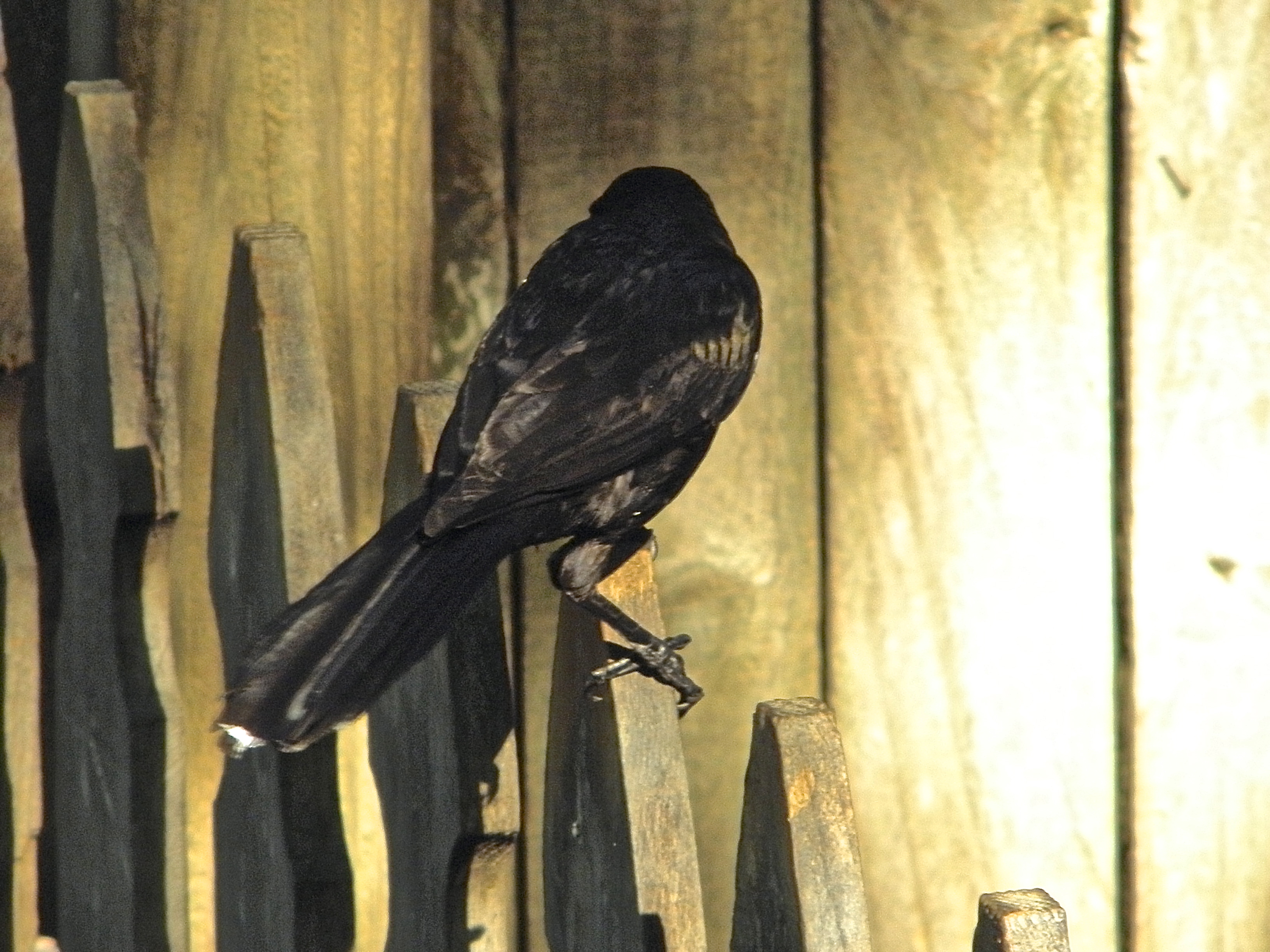
The tail’s the thing for Common Grackles.
Ah, the Common Grackle – its song like an unoiled hinge, its eyes the color of egg yolk, its strut like Donald Trump’s, its temperament the envy of schoolyard bullies.
Move over, American Robins. Make way for the real harbingers of spring. Here in the center of the country, the grackles apparently leave the city in winter to join their blackbird cousins in giant flocks, foraging for what they can find in the farm fields. But they come back to town in March, noisy, hungry, pushy and randy.
A lot of robins, despite the delusions of some romantics, have also been around all winter – in plain sight. This fact does not prevent perfect strangers from stopping each other at the edge of a snowmelt-soaked lawn and pointing wide-eyed at some red-breasted fraud pecking around for careless worms. “Oh, look,” they’ll whisper in wonder and delight, “the first robin of spring!”
What, have these people spent the cold months in bed with the blinds drawn? Robins, much more than grackles, hang out on city and suburban lawns all year long. Robins have the mystique. Grackles have. . .scary yellow eyes.
No one will ever accost an unknown person and, voice crackling with excitement, cry, “Oh, look, the first grackle of spring.” It would be like raising a pant leg and joyously announcing the season’s first wood tick. Anyway, the excited one would be wrong. Chances are the poor bird has been freezing its ample tail off for the past four months looking for leftover corn among the clods out on the farm.
Still, grackles do have their charms – that male tail, for example. It’s a grand boat of a thing, even on the Common Grackle. The great-tailed grackle, which also graces much of the the mid-continent with its presence all year, is a veritable peacock of the blackbird world. Then there’s the way the feathers shimmer from black to purple to violet-green depending on how the light hits them. But, although grackles are considered song birds, their song is, well, not really what most people would call melodious – more like odious.
There’s enough room on the springtime lawn for more than one harbinger. And who wants to be called a harbinger anyway? It sounds like something normal creatures would try to avoid. But that’s neither here nor there.
So here’s to the grackles. No doubt, when we’re all gone and no one is around to use the word “harbinger,” grackles, like rock doves, house sparrows and cockroaches, will still strut their stuff, bringing in the spring just as if there were someone around to notice.
 Bird Poop