Bird watchers face an uphill climb in the quest for dignity
Many years ago, I was lucky enough to spend about nine months in Australia as an exchange student. The dad in one of the families I stayed with was an avid bird watcher, and I’d go on day trips with him – each of which added some new species to the life list I’d begun to build. It was an exciting time, even though I was too young and stupid to fully appreciate all the opportunities that time spent in another country was handing me every day.
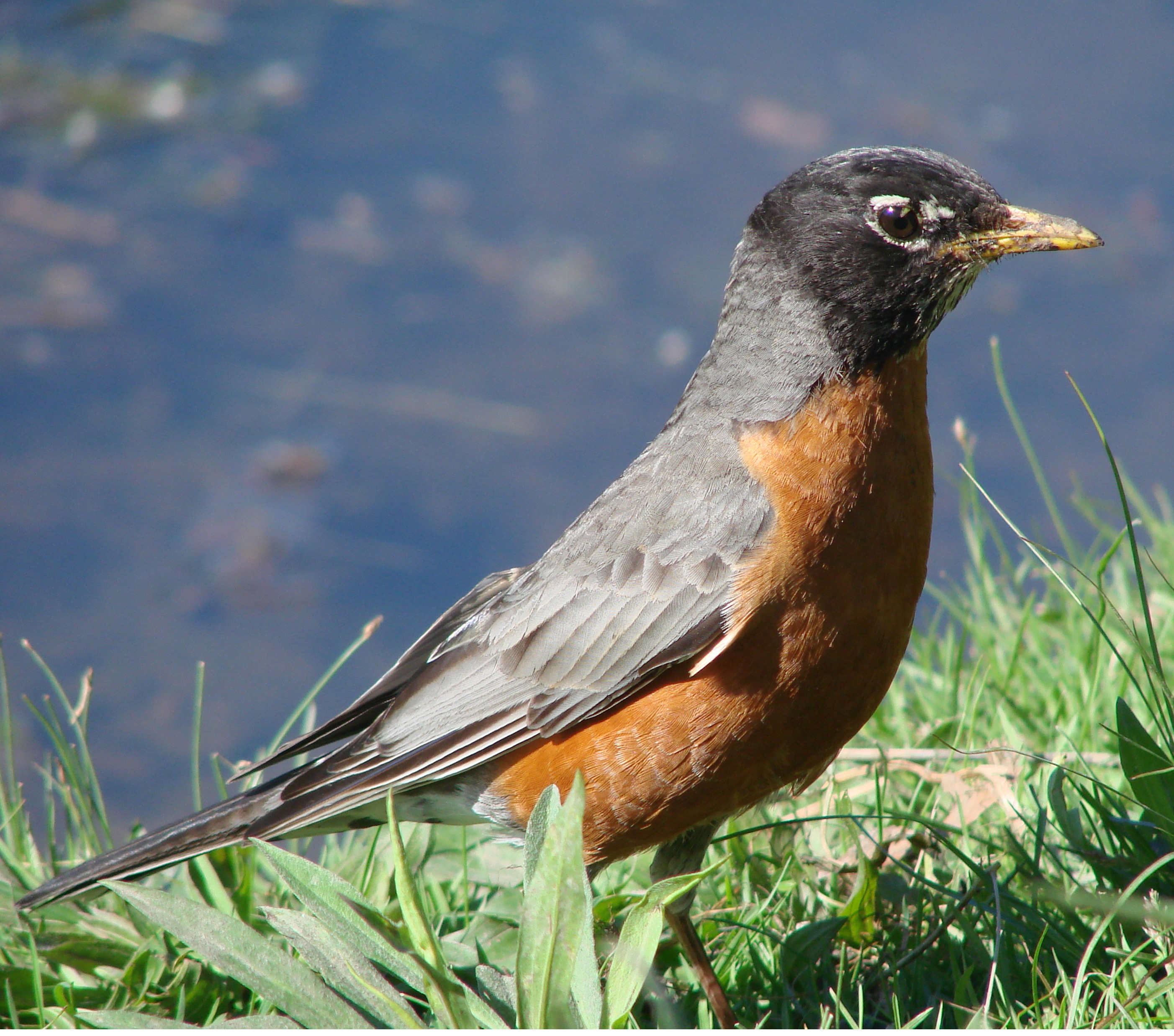
Turdus migratorius. Do yourself a favor and just call it a Robin – American Robin if you want to sound more knowledgable.
My failings as a callow youth aside, one drawback to our frequent birding excursions was the reaction of passersby, especially those in cars. We put up with quite a few hoots and hollers questioning our sanity, sexuality, maturity and intelligence. It was all somewhat distracting.
Bird watching seems to be a little more acceptable these days, at least among motorized motormouths. It is, after all, supposedly the second most popular pastime in the United States, behind gardening.
However, if you read the list accumulated during your most recent outing to someone unfamiliar with the joys of birding, you begin to see why a certain prejudice against the pursuit still exists. You’ll also understand why you should learn all the scientific names of the birds you see and restrict your use of the common names when communicating with the uninitiated.
You tell me. Which sounds more worthy of serious consideration: Tufted Titmouse or Baeolophus bicolor? How about Yellow-bellied Sapsucker or Sphyrapicus varius? Bananaquit or Coereba flaveola? Pygmy Nuthatch or Sitta pygmaea? American Robin or Turdus migratorius?
Okay, that last one is just the exception that proves the rule.
The field of battle in the war for bird watchers’ dignity is littered with the bodies of amateur ornithologists like the one who, filled with the excitement of achieving a longtime goal, breathlessly told a non-birder friend about finally, after years of fruitless searching in the sun-dappled waters off the southern coast of Florida, raised his binoculars to his eyes and focused in on a Brown Booby.
What a difference it would have made had this naive birder said, simply, “At last, I saw a Sula leucogaster.”
Official Big Year species count as of February 27: 90.
 Bird Poop