We add a hard-to-spell silly name but pretty cool bird to the Big Year list
Brother Phil, who has been a major contributor of unusual and interesting birds to our Big Year list, spotted a Dickcissel the other day. According to the reference books, Dickcissels aren’t unusual within their range, nor are they rare, endangered or threatened, but we usually see only one or two a year around Kansas City. What makes these little birds interesting is their behavior and appearance.
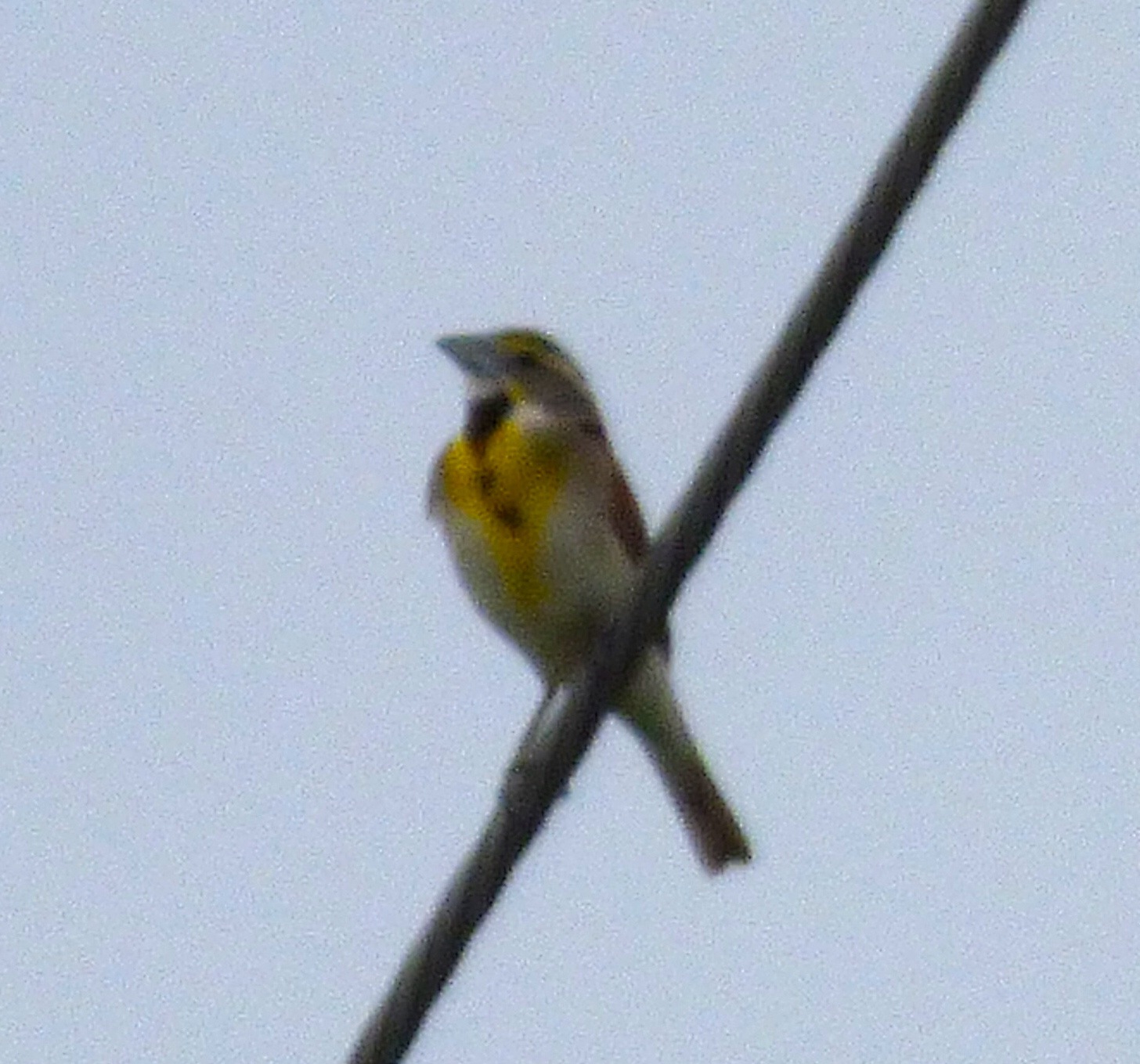
Phil apologizes for the quality of this shot, but it certainly shows the Meadowlark-like markings on a Dickcissel.
Dickcissels look like miniature Meadowlarks and are often mistaken for them. Meadowlarks are much larger and, of course, their song is quite different. In fact, Dickcissels are named for their song, which might account for the name’s weird sound, if not its odd spelling.
When they arrive at their nesting grounds, which cover just about the entire middle third of the country from Texas to the Canadian border as well as few more eastern states, Dickcissels spread out and establish their territories. But when they’re not breeding, they can form huge flocks. They’re true prairie birds, loving weeds, brush and tallgrass habitats where they feast on seeds and insects. In the winter, they retreat to southern climes, all the way into Central and South America.
In the Sibley Field Guide to Birds of Eastern North America, the Dickcissel shares its spread with the Western Spindalis and Bananaquit, some pretty rarified company as well as the Blue Grosbeak. But it isn’t closely related to any of them. It’s its own bird, so to speak.
The reason Dickcissels are sometimes mistaken for Meadowlarks is the coloration of the breeding adult male. Like the Meadowlark, it has a black bib on a yellow breast. At a glance, the resemblance might fool you, but a second look shows the truth. The Dickcissel is about the size of a House Sparrow. The Meadowlark is closer to European Starling size.
It’s probably clear from this post dedicated to a single species that we’re into the doldrums of summer after the birdstorm of spring when it comes to picking up Big Year list additions. But we’re staying with it and hope to do better with a few field trips in the coming months. You never know what feathered anomaly might lurk around the next bush.
 Bird Poop