The birds of “Discovery”—Mountain Chickadee
This is the first in a series of posts focused on the birds featured in my new novel, Discovery. Look for a new one each week.
The first time I met a Mountain Chickadee — and I use the word “met” purposely — I might have been 10 years old. My father had recently bought a fishing cabin on 31 acres near Crestone, Colorado, an old mining town where no one mined any more. The town is located on the eastern edge of the San Luis Valley, an extensive area of rabbit brush where mountain streams go to die, sinking into the sandy soil a few miles after reaching the valley floor. The cabin, surrounded by piñon, juniper and stately pine trees, with a rushing stream behind it, offered an almost Eden-like contrast to the starkness of the valley. The first thing that struck me — and I never grew tired of the sensation — was the rich aroma of mountain woodland and waterside vegetation.
And from that first visit, I’ve been charmed by Mountain Chickadees. I can’t say whether they behave the same way throughout their range, but the birds around that cabin seemed curious about us and unafraid. They’d move down from branch to branch, seeming to purposely come so close we could almost touch them. No other species of chickadee in my experience has shown that — for lack of a better word — friendliness.
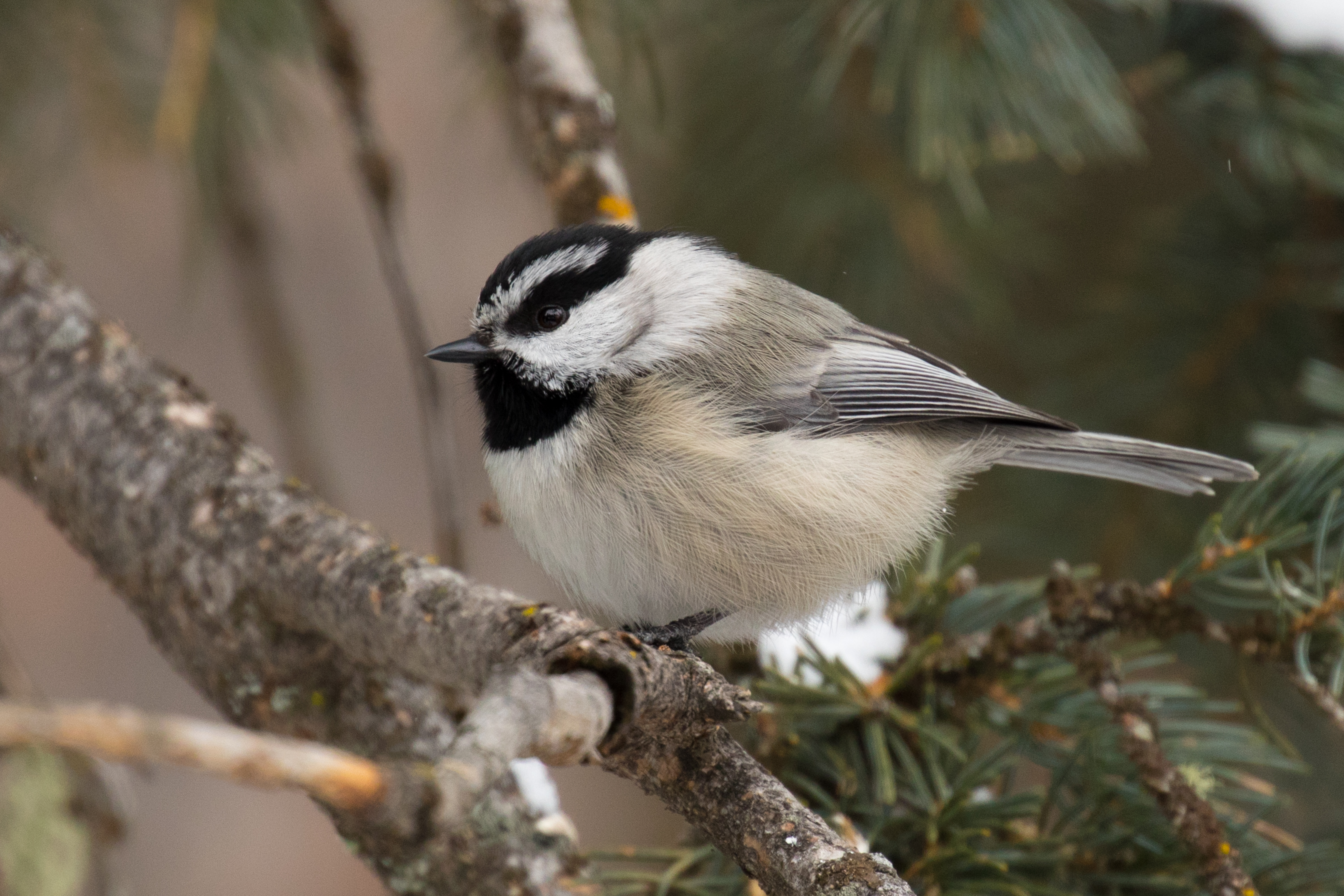
Of course, friendly isn’t the same as stupid. They’d come just so close and no closer. But if we looked carefully, we could see our faces reflected in their black eyes.
Here in Missouri, Black-capped Chickadees are common visitors to bird feeders, and Carolina Chickadees occur in the southeastern part of the state. I’m most familiar with the Black-capped because I live in northwest Missouri. We can hear their chick-a-dee-dee-dee call at home and when we’re birding in the field. But we won’t find them hopping down from a higher branch just to say, “Hello.” They’re a bit shyer than their mountain cousins.
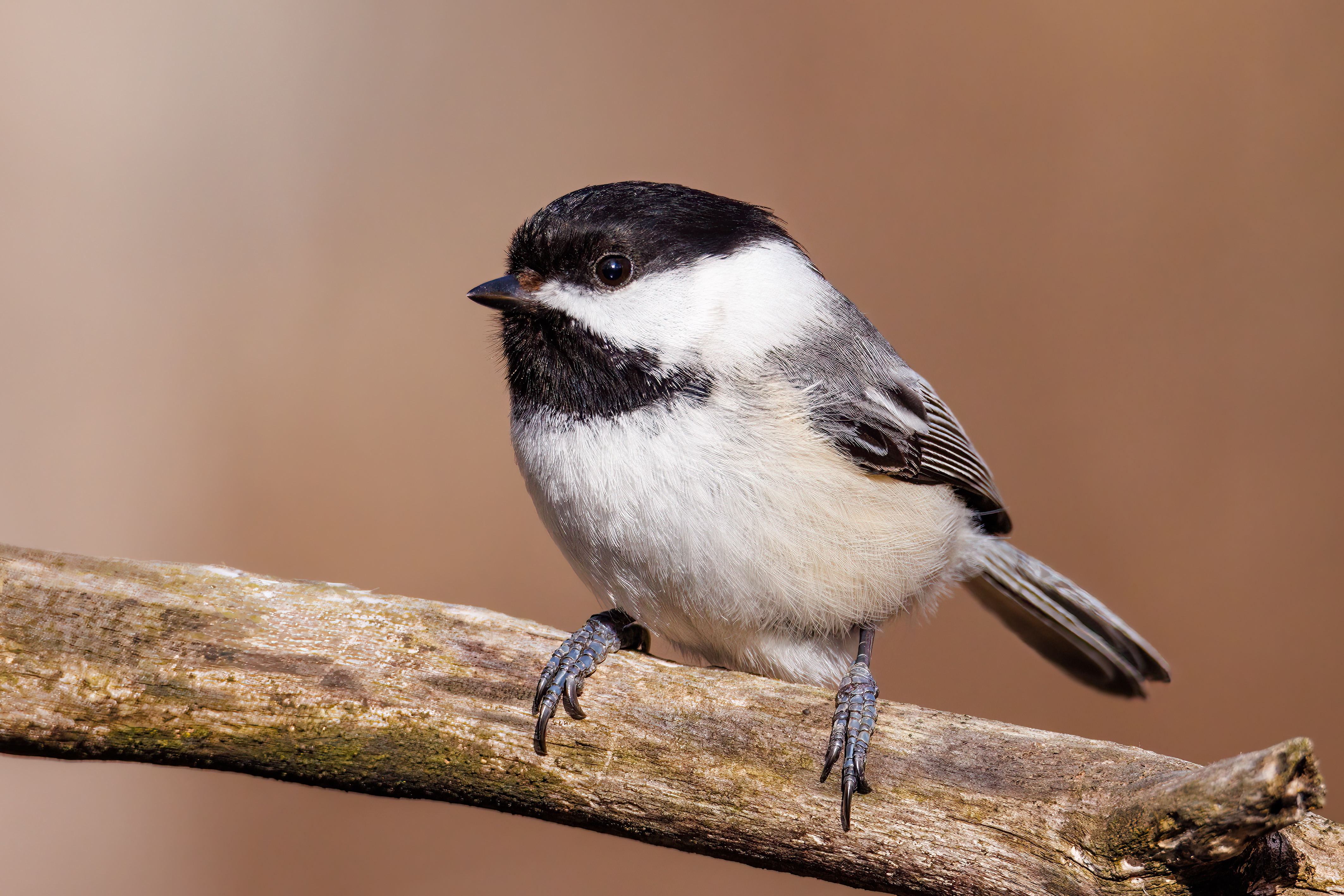
Mountain Chickadees and Black-capped Chickadees look enough alike to make identification a bit tricky. However, the Black-capped’s cap is solid black. The Mountain’s cap shows a white stripe that looks like an eyebrow. For what it’s worth, the Mountain’s beak is a little thinner, but I keep leaving my micrometer at home, so that’s of little use, and it’s hard to get the birds to sit still for a measurement anyway.
Helen Bryan, the heroine of Discovery, shares my enjoyment of these chickadees. Everyone who appreciates birds and gets a chance to visit the Mountain Chickadee’s habitat should have a chance to experience their fearlessness and their collegiality.
 Bird Poop