The Birds of “Discovery”—Dark-eyed Junco
This is the fourth in a series of posts focused on the birds featured in my new novel, Discovery. Look for another one each week.
“Dark-eyed Junco” serves as a catch-all name for six forms: Slate-colored, Oregon, Pink-sided, Red-backed, Gray-headed and White-winged. They all belong to one species, but they look different — kind of like people. In the U.S., they share quite a bit of territory, particularly in the western states. Except for the Slate-colored form. It’s around all year in much of the west, upper midwest and east from Maine as far south as Tennessee and North Carolina. During the winter it pretty much takes over the whole country.
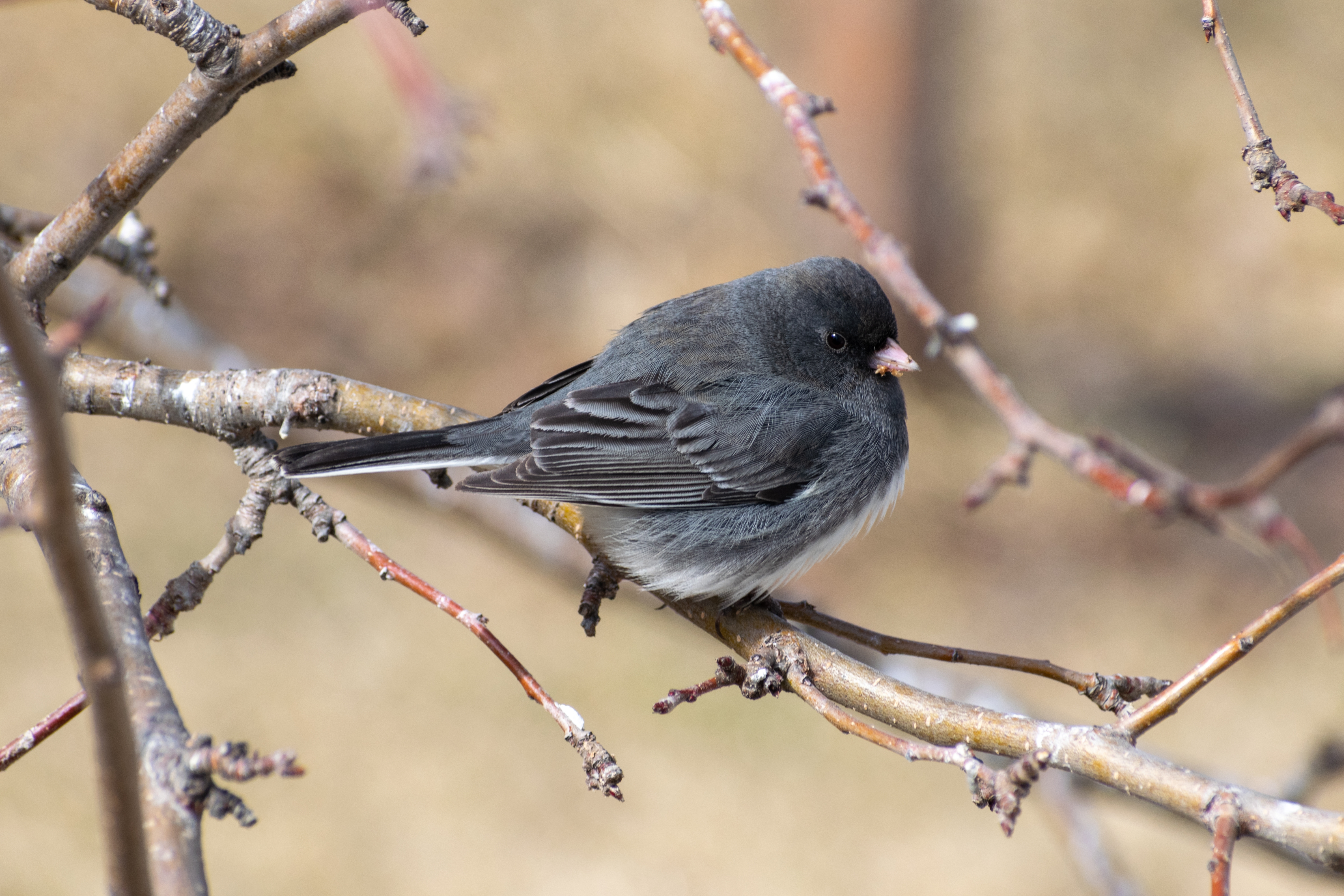
Here in Missouri, we’re mostly restricted to the Slate-colored form. Rarely, Oregon and Gray-headed Juncos will show up on somebody’s list, but that doesn’t happen very often. To make matters more confusing, the Slate-colored form has a couple of variants: one with white wing bars that make the bird resemble a female white-winged form and another that looks a little like the Oregon form. One thing that all these Juncos share is white on the outer edges of the tail that flashes when they fly. At least when you see one, you can be fairly sure it’s some kind of Junco, and you’ll be safe listing it as Dark-eyed, should you be foolish enough to take up birding and become a list keeper.
Just to keep the accounting honest, the Dark-eyed Junco isn’t the only member of the family. The Yellow-eyed Junco makes its way, barely, into the southeastern corner of Arizona and, rarely, into a small area of southwestern Texas.
The upshot: If you like walking in open woodlands where small ground-feeding birds have some cover if they need it, you’ll probably find Dark-eyed Juncos of one kind or another. Especially in winter, they like to gather in small flocks to feed, and you’ll know them by that white on the tail. It’s like a flag waving to announce their presence.
Even if you don’t like a stroll in the woods, a backyard feeder will suffice to attract juncos. I find that a wild bird mix or thistle seed bring them in reliably. The other birds spill enough seed to keep them happy on the ground.
 Bird Poop