The birds of “Discovery”—White-crowned Sparrow
This is the ninth in a series of posts focused on the birds featured in my new novel, Discovery. Look for another one each week.
Among the birds that visit our thistle-seed feeder in the winter, White-crowned Sparrows are among my favorites. They don’t object to eating other birds’ dropped seeds off the ground, and their bold, black-and-white “crown” looks pretty snappy. They’re also feisty. For some reason, they don’t like Dark-eyed Juncos or Chipping Sparrows encroaching on their territory and will chase them away, while they let Fox Sparrows and other birds have the run of the place. I don’t know where this antipathy comes from, but I’m sure the sparrows have their reasons. It’s probably some long-ago misunderstanding that turned into a permanent feud, like the Hatfields and McCoys. Fortunately, to my knowledge, there have been no deaths or serious injuries attributed to the fight.
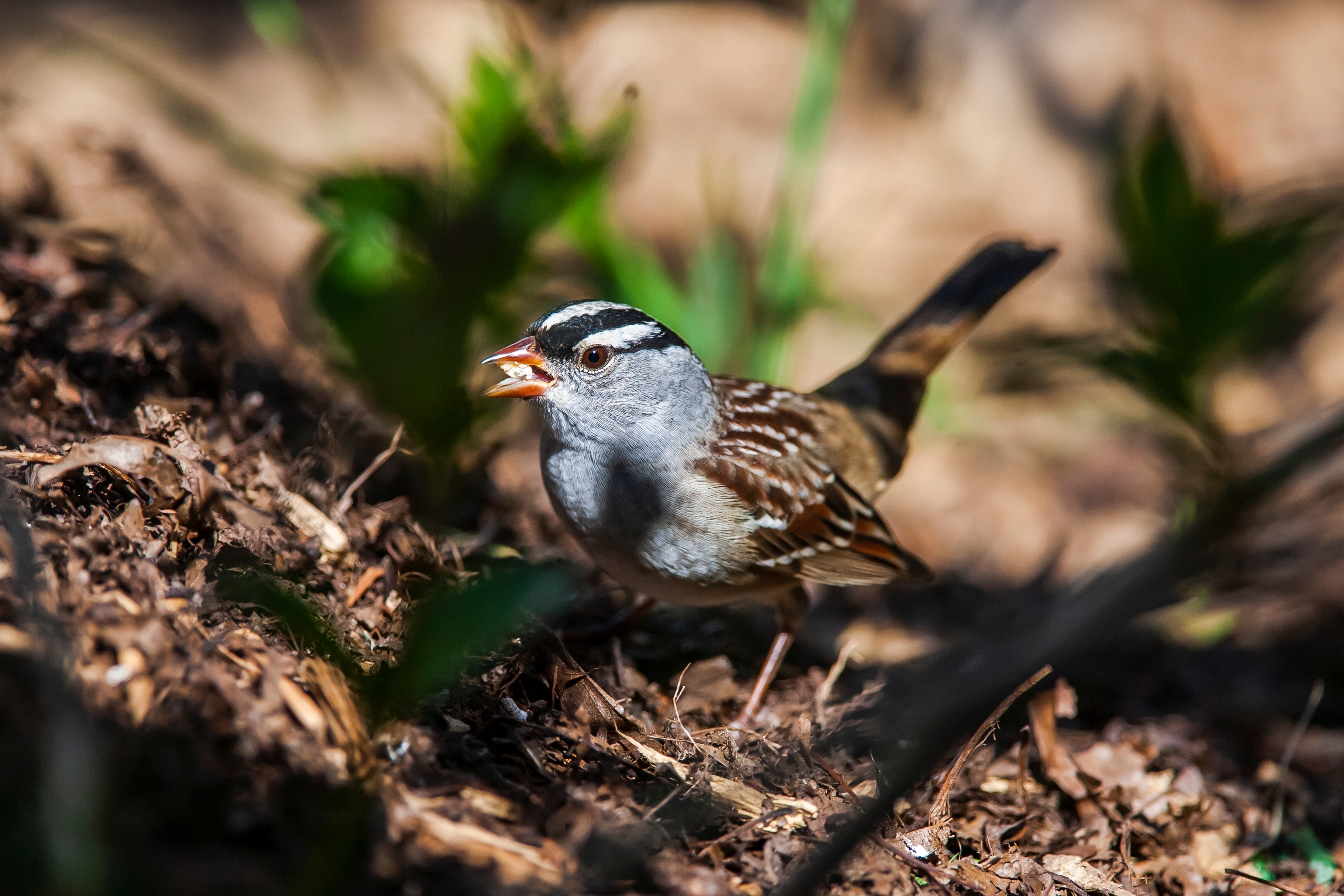
White-crowned Sparrows occur throughout North America, although they’re rare in far-southern Florida, for some reason. Most of them migrate, but some remain year-round in the western mountains and along part of the West Coast. According to allaboutbirds.org, White-crowned Sparrows from Alaska fly all the way to Southern California—about 2,600 miles—to wait out the winter. One bird flew 300 miles in one night.
Just as humans who speak the same language develop different dialects, so do White-crowned Sparrows. Which dialect they use when they sing depends on where they’re raised. It’s like saying
“warsh” instead of “wash.” My mother always said “warsh,” a product, I’m sure, of being born and brought up in central Kansas. I can still hear it: “Go take a bath, and be sure to warsh behind your ears.”
If male White-crowned Sparrows grow up in an area between two dialects, they might be able to sing in both. I wonder if being bilingual improves their mating prospects. But maybe not.
“Oh, Sidney, sing me a love song. . . .
“No, not that one. Try again. . . .
“That’s better. . . .
“Wait, who have you been singing that other crap to, you two-timing creep?”
Perhaps this source of potential conflict has something to do with why a group of White-crowned Sparrows is sometimes called a “quarrel.”
Male and female White-crowned Sparrows look alike. That striking crown makes them easy to identify. If they’re in mixed flocks with White-throated Sparrows, they’re the ones without the white throat, so the ID is still pretty simple. Also, White-throated Sparrows are less common to begin with.
Short advertisement: My novel, Discovery, will be available March 28, 2025, at betterthanstarbucks.org. You can learn more at discoverynovel.com.
 Bird Poop