The birds of “Discovery”—Turkey Vulture
This is the twelfth in a series of posts focused on the birds featured in my new novel, Discovery. Look for another one each week. And watch for the book when it’s released March 28, 2025, from Better Than Starbucks Publishing, betterthanstarbucks.org.
In scientific parlance, the Turkey Vulture goes by the title Cathartes aura, meaning something like “purifying breeze” or “golden purifier.”
Okay. It’s hard to argue with the purifier or purifying part, but “breeze” and “golden” make for a tough sell. First, there’s no gold to be found on a Turkey Vulture, unless you count the translucent part of the wings as in the photo below. If you’ve ever seen a Turkey Vulture soaring, you know what I mean. Second, any breeze coming off one of these birds would not be pleasant.
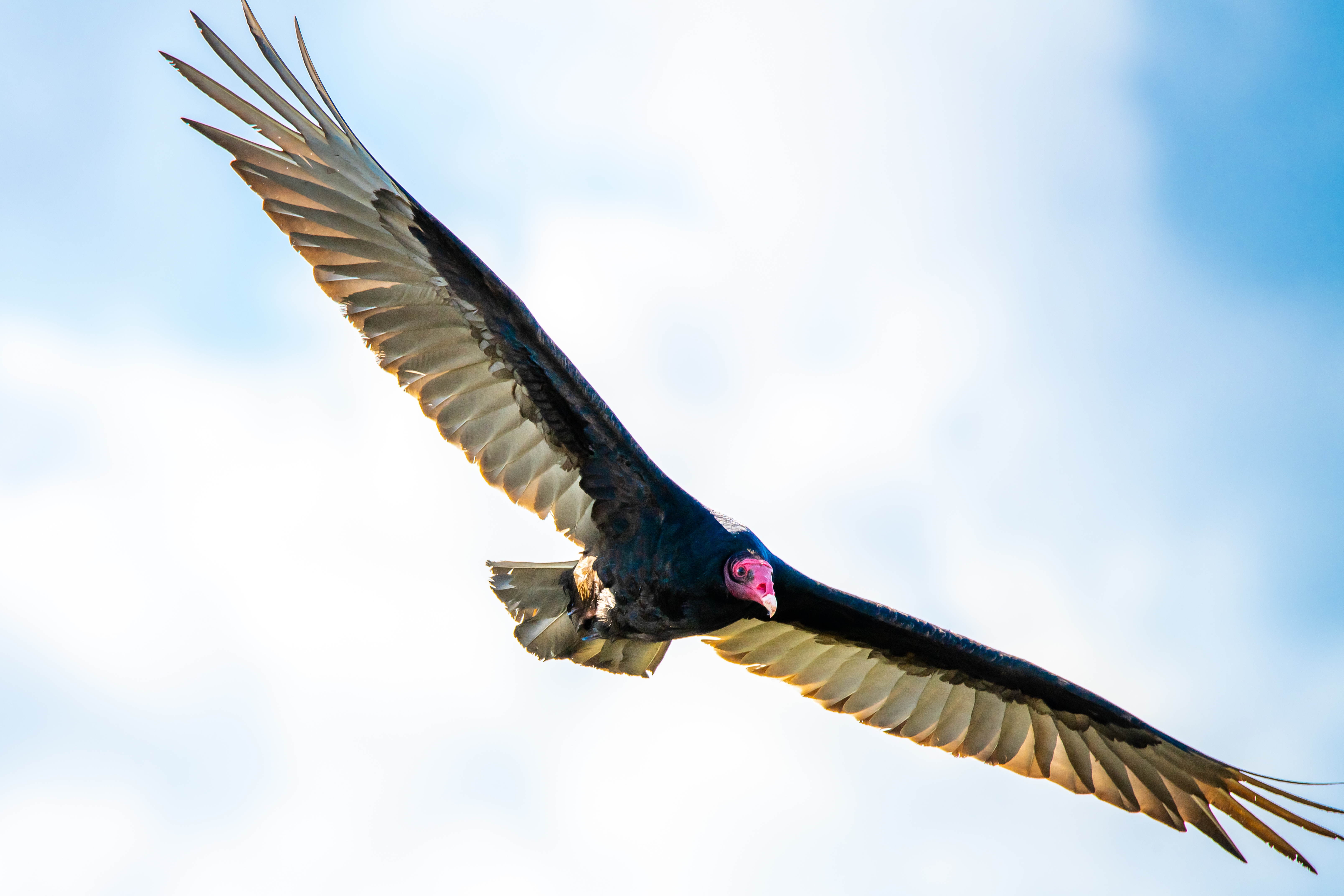
Let me explain. Turkey Vultures eat carrion—that’s dead, rotting animals to you and me. It’s an important occupation in a society with many automobiles and many miles of highway. Vultures serve as the roadkill cleanup crew and generally keep things tidy. On the other hand, when the weather turns hot, they poop on their feet to cool off.
I know. Sounds kind of counterintuitive. I’m not sure how it works, either, but I trust allaboutbirds.com when it says it’s true. Still, you see what I’m getting at when I mention the breeze: Carrion. Poop feet. Breeze. I don’t want to be downwind. I also don’t want to irritate a Turkey Vulture by getting too close. They’re known to use vomiting as a defense. Given what they eat, I’ll bet it works more often than not.
In flight, when they’re within sniffing distance of the ground, looking for their next meal with their powerful sense of smell, Turkey Vultures look as though they’ve been enjoying a few too many aperitifs. They hold their wings in what’s called a shallow dihedral, or V-shape, and rock back and forth, something like a drunk conventioneer negotiating the tables and chairs in a ballroom.
But it’s the Turkey Vulture’s head that deserves the most attention. In a word, it’s ugly. There’s no getting around it. In adults, it’s bald, red and wrinkly. Think of your angry uncle at Thanksgiving dinner and add a big, yellow beak made for ripping apart a carcass. Not a pretty picture but one you might keep in mind if you need a laugh next Turkey Day.
That naked, red head isn’t just for show, though. It does serve a purpose. It allows Vultures to “dig in,” so to speak, without collecting a lot of rotten gunk in their head feathers while they’re dining. They also have strong stomach acid, so they’re able to ward off diseases they might otherwise contract from carrion. In other words, they’re well-equipped to clean up after your Volvo.
It’s small wonder that, as allaboutbirds.com explains, the Turkey Vulture population in North America. increased 1.8% per year between 1966 and 2019. Given that the number off cars and trucks on the road, just in the U.S., in 1966 was 92.9 million and, in 2022, 283.4 million.
 Bird Poop