A rite of spring—the cranes in Nebraska
With few exceptions, for the past 29 years, my wife Fran and I have journeyed northwest from Kansas City to Kearney, Nebraska. A few times we’ve questioned the wisdom of traveling to the middle of Nebraska in March when winter is still hanging on by its frozen fingernails. But, wise or not, we do it to witness one of the great migratory gatherings on earth.
On an approximately 40-mile stretch of the Platte River between Grand Island and Kearney, more than half a million Sandhill Cranes pause on their trip to nesting grounds as remote as Siberia. They stop to feed, building up their reserves for the long flight north—and dance.
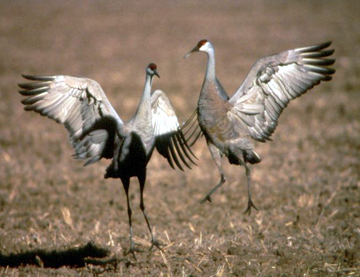
As with humans, the cranes’ dancing is a mating ritual (and, apparently, given their robust and even growing population, an effective one). Nebraska’s Platte River and the fields and marshes lying on either side of it provide a much-needed stopover for about 80 percent of the Sandhill Cranes in the world. The cranes, like millions of other birds, follow the Central Flyway on their way north every spring. It’s a long, exhausting and risky endeavor, but, hey, they’re birds. They don’t know or care why they do it. They just have to. Their bodies say go, and they go.
Fortunately, they also have built-in mechanisms to help them stay alive long enough to make new birds. Each morning, they rise from the relative safety of the river’s shallows and sandbars in a mass mini-migration to the fields. There, they feed on pretty much anything that catches their attention, such as leftover grain, insects and meatier fare, including small animals. Their tendency not to be picky probably explains why, according to NebraskaFlyway.com, they gain around 15 percent of their body weight during their six-week R&R on the Platte.
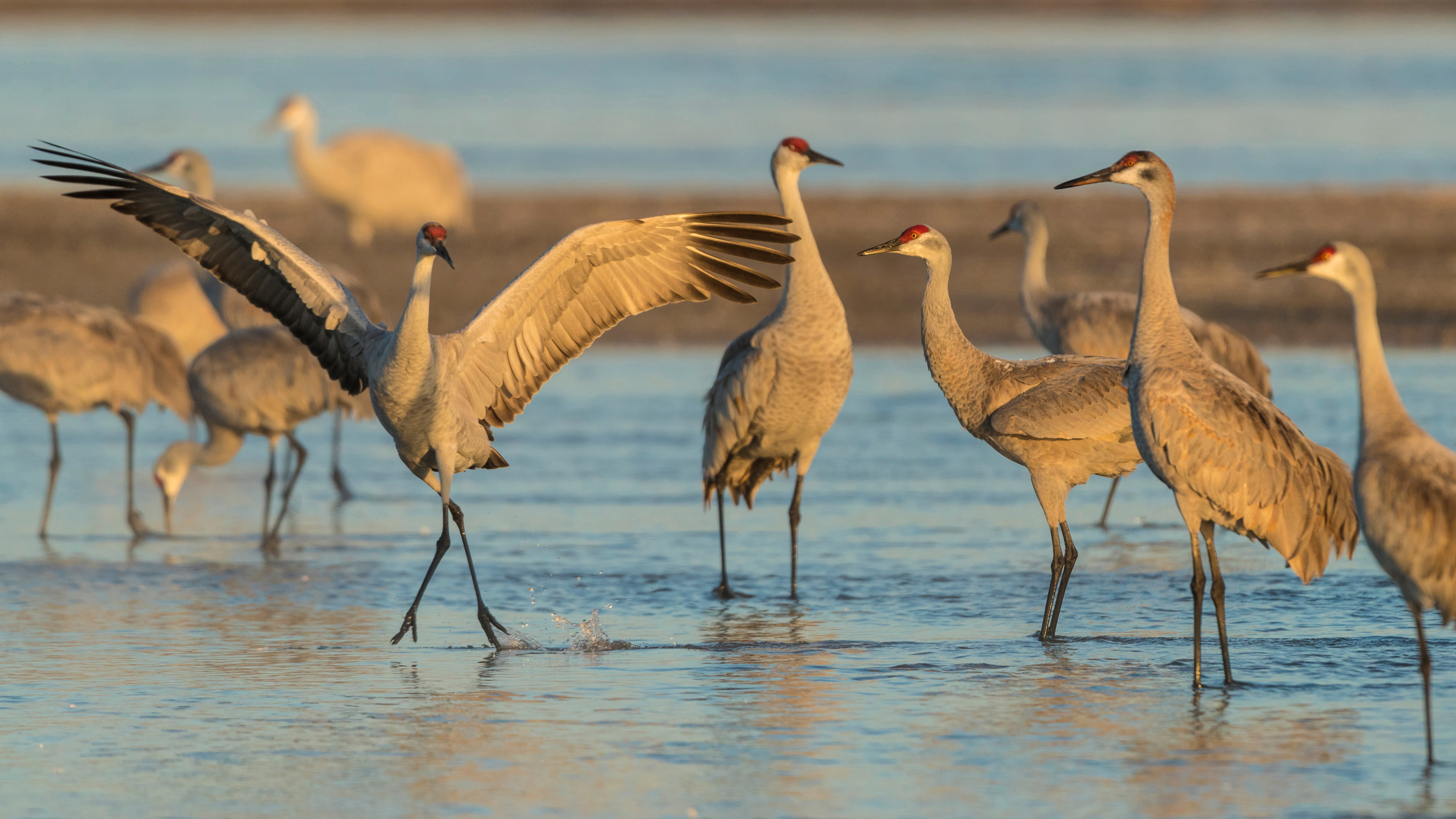
One thing these birds like to do, including as a part of their dance ritual, is throw stuff. During a dance, they’ll spread their wings wide, leap up from the ground and, when they alight, bow. But for some reason, during courting, says the National Audubon Society’s Birds of North America, they’ll run around, pull up tufts of grass and toss them. They do the same thing when they’re building a nest. Both the male and the female find material for the nest. Then they throw it over their shoulder so it lands in the same area. The female is left to tidy the new place.
From before dawn until it’s dark, if you’re outdoors, there’s no escaping the the sound of Sandhill Cranes when they gather along the Platte. It’s reminiscent of a giant cocktail party, with everyone talking at once and nobody listening. But then, all these birds have come a long way and landed safely where there’s plenty to eat and dancing all day long. That’s reason to celebrate.
Three places to see when visiting the cranes: the Iain Nicolson Audubon Center at Rowe Sanctuary, the Crane Trust Nature & Visitor Center and the Museum of Nebraska Art in Kearney. That is, If it’s possible to go inside when thousands of cranes fill the sky.
 Bird Poop